In today’s information-flooded world, the scarcest things in life aren’t platforms or even talent. It’s attention. As newer platforms flood into the market, giving users a plethora of options to pick and choose from, it’s only a matter of chance for users to be targeted ads from brands they may or may not have heard from.
This aspect of what makes our central facet of modern life, the economy, so crowded is what gives the term attention economy a meaning, beyond the pages of a textbook.

Regardless of your seat as a consumer of the world’s big brands, a marketer of those said brands, or even as the brand itself, this term is creating waves and it’s high time we debunk it.
Attention is a scarce resource, and we are only beginning to grasp the power attention brings to businesses
Unlike ideas, teams, or brands, attention is free-flowing and readily available for brands competing online.
With so much of our lives’ daily transactions and needs taking place on social media, users are investing more and more time and eyeballs to engage and connect with everything they come across online. As the future of metaverse marketing gets closer to our grasp, the lines between the boundaries of what’s good for us and what we are subconsciously participating in will get blurry and blurrier still.
Read more: The Super Impacts of Metaverse on Advertising
Take the Kardashians for example.
This group of family entrepreneurs/influencers is always known to “break the internet” with their posts, but for some reason, we entertain this. It’s everything we loathe on social media: small, meaningless, bite-sized content that generally doesn’t provide value to us that you hate looking at, but nobody has enough self-control to look the other way. This bite-sized, meaningless content then spreads like wildfire throughout your Explore and For You pages, and boom, never-ending conversations start to take place left and right.
Just like serial gamblers take their chance to win more cash in the casinos of the world, so does the attention economy prey on the eyeballs of users.

Forming currency of this realm: likes, shares, comments, and smiley emojis – whatever the symbol evidencing engagement – results from the same market logic. The logic summarizes the more time a prospect spends with a product, service, offering, idea, or any other amalgamation of a brand, the better.
Sounds fine, right?
That logic carries weight with some, but people are starting to realize just how insidious the attention economy is. True information and value hide behind popular and trend jacked news and offerings. After all, an influenced and engaged user is more probable to buy the brand’s offering or choose its services.
If that’s the end goal, then how can brands do better to ensure the same results, minus the manipulation and exploitation of users?
While it’s vital and important to capture the attention of users across media channels, brands should never lose sight of what truly matters: building meaningful relationships with their customers.

It is the power of communication’s creativity and brand recall that will have the greatest impact on capturing their users’ attention in the first place itself. Brands should take viewability second to focusing on optimizing the attention on ads and branded content to increase the impact of effectiveness.
Brands and marketers should also…
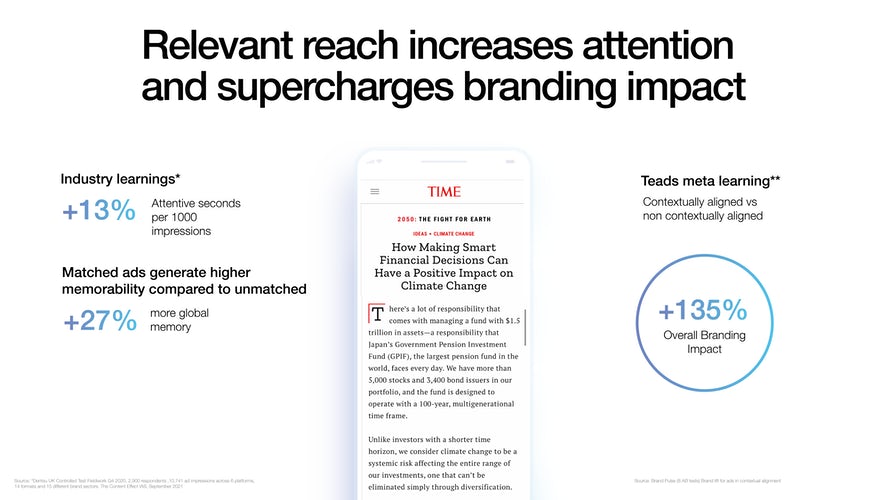
- Align with contextual content: Relevance of ads cannot be understated. This is because our brains are programmed to find certain content interesting that we have already been predisposed to liking, enjoying and engaging with. Users won’t just stop and stare at your content, they would be the most interested in purchasing into your brand if the offering is relevant to their wants or needs.
- Brand code your way into your user’s minds: This is where any and all elements of what makes a brand, unique, comes into play. It can be a catchy tune, a jingle, a logo color, a unique icon or even tagline! Creativity is key here. The more unique a brand is compared to competitors, the more customers will know who you are and what you stand for.
- Use “less” words: Word creep is a real thing. Before you know it, your one sentence ends up being half a paragraph in length, which (let’s be honest) doesn’t work well in the attention economy. Use “less” words, but also use less “useless” words, too.
- A meme over a memo, any day: A meme goes a long way in today’s evolving digital society. No longer a communication tool amongst youngsters, online users tend to remember quirky, punchy visuals, and engage with an impact on it.
- Know what you are here to do, and do just that: This sounds tricky to get, but essentially, do what your brand is created to do. If you’re here to sell shoes, then sell those shoes. If you’re here to offer users the best hair extensions, then by all means, be authentic in your pursuit of finding followers.
We reject the argument that modern technology is changing us, but rather we acknowledge the bountiful opportunities found in the digital space. While trends and social changes and brands come and go, we will still be here to help you solve all your digital marketing needs, anytime, any day. Reach us here!