Planning to run A/B testing? Bookmark this checklist for a perfect split test that can help you get closer to your goals.  

But first, why bother with an A/B test in the first place? Let’s take an in-depth look. 

What is A/B testing? 

A widely used marketing term, A/B testing refers to the creation of an experiment primarily designed to see which of 2 copies of an advert, visual, caption, strategy, or messaging performs better than the other.  

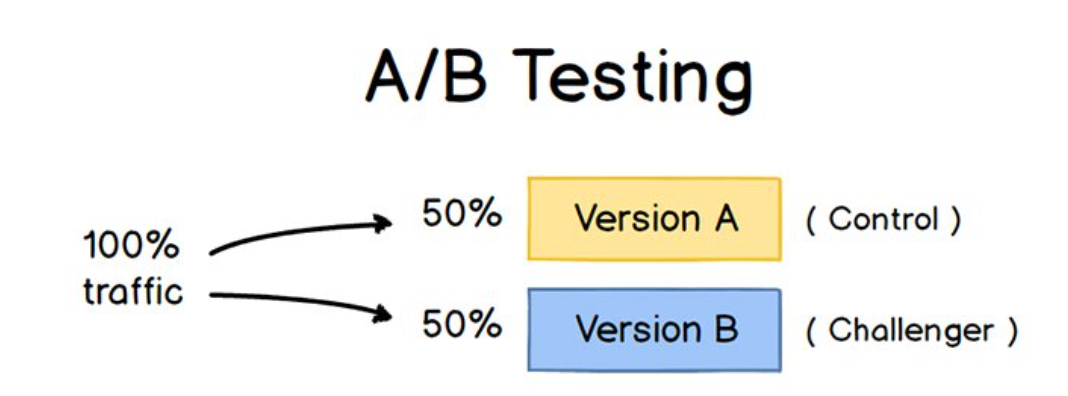
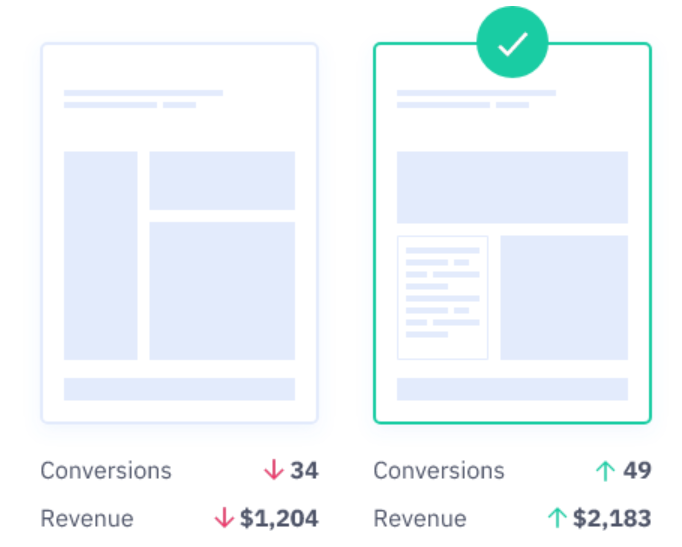
It’s done as a simple test with two lab-created variations (Variation 1 and 2) of a similar style, then split traffic to those variations 50-50. The variation that brings more desired results wins the split test.  

The winning variation will then be selected as the “real” version to be used in the actual execution.  

So now, you have the desired variation and you’re confident in hand with the results it can garner.
When should you use A/B testing? 

Primarily designed to analyze how or what users want more of by giving two similar but different options to react to, A/B testing can make a big difference to campaign performances in real life.  

A change as simple as the headline or sub-headline can even stun businesses alike.
  • Improve user experience by identifying visitor’s pain points 
  • Lower cart abandonment, which is critical for any e-commerce business 
  • Increase engagement by reducing bounce rates 
  • Drive a higher Return on Investment (ROI) from campaigns 
What can you A/B test? 

Some of the more popular actions you can take to split test would be the following: 

  1. Paid ads (make changes in the headline, ad copy, or targeting) 
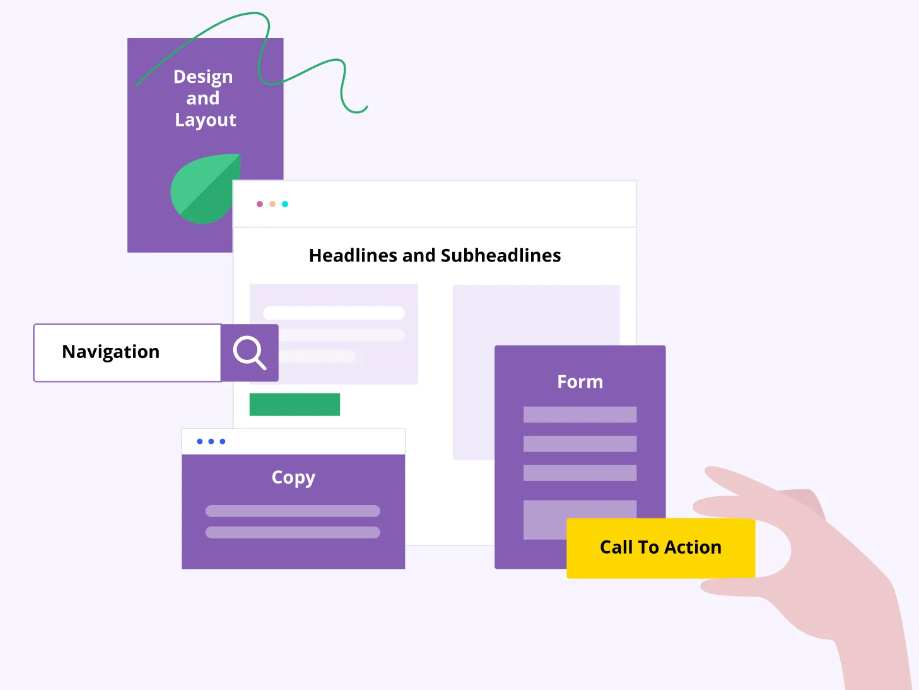
  2. Landing pages (make changes in the headline, landing copy, CTAs, or page layout) 
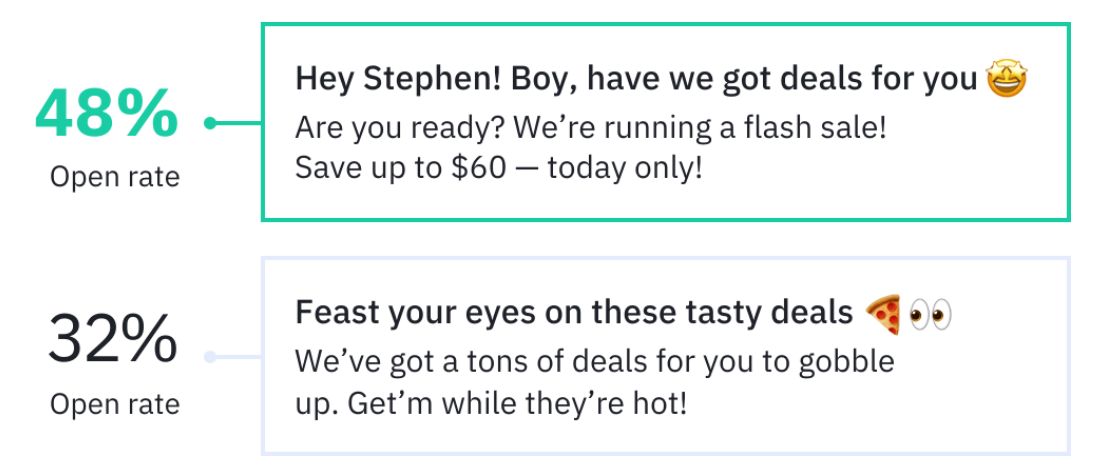
  3. Emails (make changes in the subject line, CTAs, design, or email layout) 
Challenges of A/B testing 

Every year, marketers face many challenges when it comes to A/B testing. Here are some common challenges faced, and more importantly how you can overcome them! 

  • Figuring out what to test  

Since there are so many elements of marketing to choose from, it can sometimes be a challenge to narrow down what could be so critical in obtaining favorable results.  

elfo tip: Start by identifying which pages your visitors spend the most time engaging on. Then, utilize a heatmap tool to check which areas receive high engagement and which areas perform less favorably. Then, plan you’re A/B variations based on what you can optimize better. 

  • Analyzing or interpreting test results 

Now that you have identified which area you would like to optimize further and performed the subsequent A/B testing, then comes reading the test results.  

This is an area that most people fail to grasp, and it could even extend to inaccurately implementing the possible test results.  

elfo tip: Make data a good friend of yours. Consider hiring an A/B testing expert to accurately read the results or train you and your team to analyze and interpret the results data.  
  • Changing experiment settings in the middle of an A/B test 

You might feel like changing the experiment settings can give you a better result at the end, or operating from the ethos of “more can be more, but less will always be less”.  

News flash, this will only end up changing the sample size or skewing test results as the variants get harder to control.  

elfo tip: Avoid the temptation to do so at all costs! 

  • Maintaining a testing culture in the team 

For your conversion rate optimization (CRO) to be successful in the long run, maintaining a consistent A/B testing schedule is critical. However, challenges may arise when there are fewer resources to do so.  

elfo tip: Channel your limited resources into testing the most important and integral parts of your marketing efforts. Be it landing pages, emails, or e-commerce cart abandoners, doing so will help instill the need to continue the efforts for a long time. 

5 easy steps to perform an A/B testing 

  1. What is the goal of your testing? 
  2. Identify the variable you would like to test 
  3. Use the right testing tool that is easy to use and intuitive 
  4. Run your tests with a single traffic source for better clarity on the results 
  5. Monitor from time to time and measure the results 

Start A/B testing with our team of digital experts at elfo! 

It’s a great way to optimize your current marketing efforts and bring in bigger results that will stun you and your clients! Reach out to us and let us help you overcome any challenges you have.

For many businesses, sending individual emails with a personal touch is great for building customer relationships, but it isn’t exactly a scalable approach. When the business grows, you’ll need a more efficient way to convert prospects into customers, and customers into loyal advocates.

Without the right tools, marketing to a growing list of customers can be quite challenging. A marketing automation platform can help overcome these challenges. Automating repetitive tasks such as email marketing will enable your marketing team to focus on delivering a more personalised experience for your customers.

Today, staying in touch with your audience at different stages of the customer lifecycle is only possible with a marketing automation platform. Let’s find out how marketing automation works to help businesses streamline their workflows and nurture multiple prospects at the same time.

Why Businesses Should Use Marketing Automation

Many businesses may be collecting more customer data than ever before, but it doesn’t necessarily mean that all that data is being put to effective use. Among the common challenges faced by businesses, generating qualified leads and keeping customers engaged throughout their journey remain top of the list.

When customers get in touch with your company, they may have a disconnected experience as they move from team to team across different channels. Creating healthy, long-term relationships with your customers is only possible when you can solve this pain point in the digital-first, omnichannel era.

Marketing automation can reduce this friction by gathering data in a usable format to inform teams at different stages of the customer lifecycle. When marketing automation is thoughtfully integrated, you can design a sales funnel with accurate touchpoints.

Convenience is What Marketing Automation Is All About

Automated Email Marketing

When done well, marketing automation can help businesses to cut through all the noise and reach customers in a timely and appropriate manner. Here are the key benefits:

1. Adjust and send more relevant content

You can create, develop and use buyer personas on a marketing automation platform to only send the information each prospect will be interested in. From the data you’re already been collecting, automation can highlight and send the most pertinent content at the right time.

2. Provide better answers, faster

When you unite the data siloes used by various teams, marketing automation can help your business manage leads better by answering incoming questions quickly. Direct access to data will reduce the amount of time employees need to dig around for information to provide the right help to customers.

It becomes much easier to understand your customers’ history and automate responses based on previous purchases and actions.

3. Offer seamless, omnichannel experiences

Nowadays, customers often jump from one channel to another, expecting to continue their sales journey seamlessly from the last channel they were using. People want to get the same customer experience no matter what channel they engage your business on.

A marketing automation platform can leverage the customer data your business has collected and stored to offer your customers a personalized experience, such as pre-filled forms on landing pages or targeted emails that meet their needs.

How Marketing Automation Works

Marketing Automation Software

Marketing automation uses software to automate all kinds of marketing work. When choosing the right marketing automation platform for your business, you should thoroughly understand what your needs are.

Look out for these essential features before starting your marketing automation journey:

  • CRM Integration

Whenever you collect information from your leads such as name, email, type of customer, and purchase history, it should be uploaded and stored in a database. Without access to these detailed records, all your marketing automation plans will fall through. All your automation activities must feed into this CRM tool before starting any campaigns.

  • Email Campaign Management

Thanks to marketing automation, email campaigns can be prepared, created, and scheduled months in advance. You can use advanced features such as A/B tests to improve the performance of your emails.

Depending on your customer interactions through other integrated channels, you can also have diverging email paths that can trigger more personalized emails. The ability to stagger large email blasts also boosts your SEO capabilities by safeguarding your company’s IP ranking.

  • Workflows

The most important feature of marketing automation is the ability to create workflows to support your marketing campaigns. Workflows are simple coded instructions joined together to guide all your automation processes.

Each instruction completes a task on a specific trigger, such as sending a follow-up email to customers after they have subscribed to your company newsletter. Experienced users can create complex workflows that send one of several emails based on an extensive set of criteria. To demonstrate their effects on the entire marketing campaign, visual dashboards are made available to map these workflows.

The best thing about creating workflows is that it requires no coding knowledge! You have the choice of either creating them from scratch or selecting from templates provided by the platform. Additionally, they are easily modified with a few clicks before or during a campaign.

  • Statistics and Reports

Metrics are the way to gauge the success of marketing automation. Ensure that your marketing automation platform has a powerful and easy-to-use analytics dashboard that helps you visualize open rates, CTR, conversion rates, and more. This will inform the next steps to take in your marketing automation strategies.

If the platform comes equipped with advanced segmentation tools, businesses can use the integrated data to improve their customer segmentation strategies. Detailed analytics such as conversions, CTR, and website statistics inform new criteria for customer segments. More precise segments enable your marketing team to boost the personalization of every customer interaction.

  • Budget Management

Resolving the age-old dilemma for marketing departments, a marketing automation platform helps you manage your budget spend. When linked through the CRM tool and an integrated accounting system, campaign costs can be updated in real-time with every proposed adjustment.

  • Landing Page Builder

For certain marketing campaigns, a landing page may be required. Some marketing automation platforms allow you to generate simple landing pages with a sign-up form for interested prospects. Whether hosted on the main site or hosted independently, these landing pages can be tagged with tracking URLs.

Make it as convenient as possible for your marketing team to create landing pages for your customers to sign up and download your content. elfoMAP has a simple drag-and-drop interface that lets you create marketing campaigns tailored to your specific promotions.

Marketing Automation Best Practices

Marketing Automation Strategy

Here are some best practices to keep in mind when designing your marketing automation strategies:

1. Collaborate with other teams.

Several teams in your company will be involved in bringing your marketing automation strategy to life. Get their input and buy-in before you begin.

2. Create process visualizations.

To effectively convey the ultimate objectives of your plan to your management, use detailed diagrams of your marketing automation workflows.

3. Prepare for customer segmentation.

Consider your customer data carefully. Think about who you’d like to engage, how and why.

4. Prepare your content strategy.

Creating interesting, engaging, and relevant content and messaging to reach all stages of the customer lifecycle will be one of the activities your marketing team will now have more time to commit to.

5. Analyse as you go.

As you run multiple campaigns concurrently, you should be observing what’s working and what’s not. Check your analytics from time to time and make the changes that will grow your business.

Key Takeaway

Automation helps businesses complete time-consuming marketing tasks and puts the huge amount of data gathered through multiple channels to work in realising optimised marketing campaigns.

Now you know how marketing automation works. Are you ready to take your marketing strategies to the next level and improve your customer experience? Why not sign up for elfoMAP! Email marketing can be made easier with the right suite of design and support functions.

Traditional approaches to marketing and promotion are being overturned. Today, word of mouth via social media is the most influential means of attracting new customers to a brand. But how can social media listening increase customer advocacy?

Every brand wants to attract a larger audience while retaining the loyalty of its existing customers. Employing a social media listening strategy will enable marketers to do both. This article will explain what social media listening is, why it’s important, and how it can help improve customer experience.

What is Social Media Listening?

Social media listening is when you actively follow all discussions and conversations across social networks relating to your company’s brand. This extends to social sharing sites and forums that cover the entire industry in which it operates.

Why Social Media Listening Matters for Brands

Across social media sites, review aggregation sites, and blogs, conversations are taking place and companies want to be aware of all those related to their brands. Customers are

  • Highlighting elements of their customer experience which are pain points
  • Calling out the products and services they like and dislike and stating the reasons why
  • Providing insights into how products and services could be improved

This authentic and honest feedback from consumers is invaluable for companies to know. With the right tools, companies will be able to pinpoint their customer’s needs more accurately.

Related topic: How Brand Loyalty Influences Consumer Behaviour

How Can Social Media Listening Increase Customer Advocacy and Improve CX?

Social Media Marketing Agency

Social media listening provides insights into how consumer trends or behaviors are evolving and how wider industry changes are influencing customer expectations. Particularly, your sales and product teams will be able to acquire useful information about which products and services in the market were a hit.

The best part about this strategy is that consumers will go into detail about what features they like and don’t like. With such data, your company will have all the information it needs to improve its products and services.

With a wider understanding of the business landscape, as well as the company’s position within it, improvements can be made in the right areas to benefit the customer experience. More positive reviews are likely to come when you can follow the customer’s demands so closely.

What’s the Difference Between Social Listening and Social Monitoring?

Social monitoring and social media listening share certain similarities but they’re not the same thing.

Social monitoring is the act of tracking specific hashtags, keywords, and direct brand mentions and storing that data. It helps measure conversations around a company and identify moments when to directly engage with customers. Specifically, if a brand or product is being mentioned for the wrong reasons, the company can step in and become part of the conversation and solution.

Unlike social monitoring, social media listening is more comprehensive in scope. It tracks all conversations related to the industry sector as a whole (i.e., topics of interest, the company’s brands, and its direct competition).

When you get around to using the captured data, it becomes social media listening. Analysing the data from industry trends and brand conversations provides insights that aid in business decision-making.

In essence, you can think of social monitoring as a reactive approach to your business presence on social media. Social media listening is the proactive approach where you observe, analyze data, and adapt the results for future planning.

What is the Best Approach to Social Media Listening?

Digital Marketing In Facebook

Step 1: Focus on One or Two Topics

A well-designed social media listening strategy needs to be able to collect, process and effectively analyze the breadth and depth of data coming in. Unless the company already has the capacity and expertise, the incoming information can easily overwhelm systems and teams lacking in the right resources.

For this reason, it’s best to start with a pilot project focused on one or two potential topics related to your brand, products, and/or services. This pilot project will help prove to your company the benefits of social listening with initial insights and test internal systems and processes for future opportunities to scale.

Step 2: Spread Out the Keywords

While you may feel initially restricted by the scope of your topics, you don’t have to limit the number of search terms or data points to track. If you narrow your focus too much, the data you gather may be insubstantial to deliver actionable insights or place the findings in context.

Realistically, you should consider targeting keywords that are both, directly and indirectly, related to your products and services and the industry as a whole. This also includes incorporating hashtags and terms relating to direct competitors.

Step 3: Choose the Right Social Media Listening Tools

To achieve the best results out of social media listening, it’s necessary to leverage the capability of applications optimised for this purpose. For companies unfamiliar with what’s out there, it’s recommended to engage a specialist organization that can help plan the strategy and provide the expertise to identify and apply the right tools for optimum results.

There is a good selection of tools and applications on the market that can simplify the acts of both social listening and social monitoring. Here are 3 excellent tools you can consider:

Step 4: Classify the Collected Data

Before you analyse all the data collected through social media listening, simplify your findings by classifying them into appropriate categories. You should do so in familiar metrics, such as the ones used in social media, to provide an easier understanding.

For example, one of the data classifications can be ‘sentiment’. This is where you would put all the discussions, comments, and posts directly referencing the company or its products and services in a positive, neutral, or negative manner.

Step 5: Analyse the Data

Now, for arguably the most complicated part: combining and comparing all the data gathered from social media listening with any relevant data within the company’s internal data sources. This includes customer histories sitting within the CRM system and other data collected through contact centres or direct customer interactions.

Take note that if this is a pilot project, you may encounter challenges with blending the different types of data and data formats that sit across multiple systems within your company. Consider consulting with experts who can provide assistance in data analysis and draw out the insights you want.

Step 6: Act on the Findings

Once you get the report, you need to share the insights with all the relevant stakeholders in the company. Depending on the time-sensitivity of certain social media topics or conversations, taking the next steps to improve the brand’s image and customer experience is a process that requires quick but careful coordination to act on detailed customer feedback.

Step 7: Collaborate with Influencers

This final step is conditional, but it can help capitalise on customer loyalty and turn it into customer advocacy. What you may notice from the processed data is that some people have a louder voice than others. Social media listening can help identify potential brand influencers.

Certain individuals’ posts or comments seem to attract more attention and sometimes they can have a great influence on how a brand is perceived. Take advantage of user-generated content as a powerful and authentic form of marketing and promotion that’s become so vital for businesses.

Related topic: Why Is Content Moderation Important for User-Generated Campaigns?

Conclusion

The benefits of using social media listening include:

  1. Identifying potential customers across various social channels
  2. Flagging customer issues and allowing appropriate responses
  3. Promoting company messages more effectively

When used effectively, social media listening can boost the effectiveness of your marketing campaigns and help lower customer acquisition and retention costs in the long term by empowering companies to become active participants in the conversation around their brand.

Social media listening is definitely worth your company’s investment to build a base of loyal customers. Don’t know where to start? Then get in touch with our experts at elfo. We’re here for all your social media marketing needs!

If you have ever operated a Small Medium Enterprise (SME) or just starting digital marketing for your business, you would have probably come across the term Local SEO. Hailed as one of the most underrated aspects of digital marketing, it creates tremendous ripple effects for any company that is selling products or offering services on the web.   

So, What Is Local SEO, And More Importantly, Why Should I Care? 

When you open your phone and search for the “Best Indian restaurants near me,” what do you see? They may not be the best Indian joints in the state or part of a massive food chain. They are often likely locally-owned Indian food cafes and stalls that pop up on the screen, closest to you right now.

That is the power of Local SEO. 

Internet Marketing Service

No, Local SEO is not magic, but it does wonders to increase your business’s visibility for online users in your geographic location on popular search engines such as Google and Bing.   

The sister to the more popular duo member, External SEO or SEO, Local SEO can promote your business for location-based search engine results pages (SERPs) by improving your local search rankings. If you do your Local SEO right, your business gets on top of the search results page. That practically translates to more eyeballs for your business.  

Local SEO comprises certain geo qualifiers such as the zip code, state, city, and ‘near me’ searches. The three principles that make up Local SEO lies in proximity, prominence, and relevance.   

Search Engine Optimization

How is Local SEO Different From SEO? 

Local SEO might be the underdog of the two, but it has great potential. SEO or External SEO focuses on optimizing your business websites to fit a global audience, while Local SEO caters to the audience closes in proximity to your business.   

Digital Marketing Platforms

If You’re a Small Business, Why Should You Do Local SEO? 

Although most small businesses are digitizing to come online, not all optimize for local business listings and appear on the top search results pages where most customers are. In 2021, over 70% of online small businesses lose out on this opportunity with no SEO strategy in place.   

That’s a scary figure when over 75% of people never scroll past the first page of search engines.   

Besides Ranking High On Search Pages, What Else Can Local SEO Do? 

  1. It doesn’t burn a hole in your wallet to manage an online presence. During economic downturns such as the pandemic, organic rankings have a better ROI than paid advertising. That reality is shared by B2B businesses, where 61% of B2B marketers generated more leads through SEO and organic traffic than any other marketing initiative.  
  1. It helps direct local customers to find your business. Over 72% of customers who did a local search visited a physical store within five miles of their location.  
  1. It doesn’t just direct local customers to your store, but these people already know what you’re offering, and they are interested. 80% of major purchases starts with online research, even if the purchases happen in a physical store.   
SEO Digital Marketing Agency

Here’s A Free Checklist Guide To Do Local SEO – The Right Way 

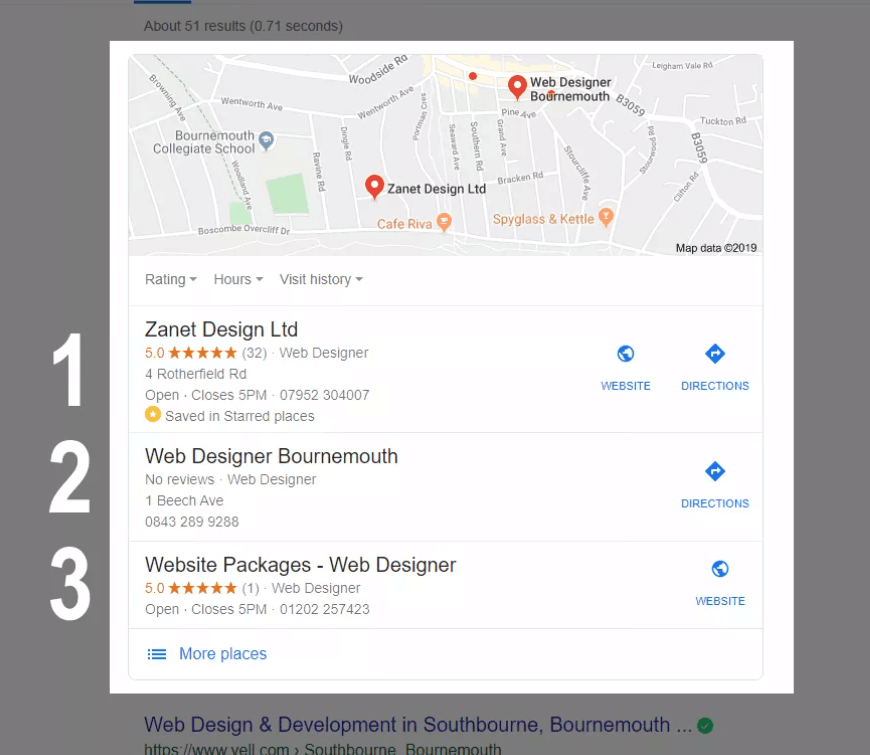
  1. Optimize your Google My Business listing. Be sure to give all the information Google needs to get closest to a score of 100%. The more you provide your business’s details, the more likely you’ll be able to rank high up in the Google 3-pack.  
  2. Use social media to your advantage. It’s no longer enough to have an account online, but it’s another way for you to reach out to your customers through appealing content. 
Affordable Digital Marketing Services
  1. Reach out for reviews (yes – the good and bad!). Customers are quick to note dishonesty and illusions. Being transparent goes a long way. 
  1. Use SEO-friendly URLs. Long-winded and badly-written URLs have a high risk of being flagged by Google as “spammy sites”, which can hurt your website’s performance. 
  1. Don’t forget SEO titles and descriptions – including the meta description.  
  1. More backlinks, more referrals create a win-win situation. 
  1. Build and earn credibility when you use outbound links and internal links. When using outbound links, be sure to note the source of the external link and the domain authority.  
  1. Use Schema or structured data markup, especially for businesses with physical locations. In layman’s terms, it is an additional code to your HTML that improves the way search engines read and represent the business in SERPs. 
  1. Leverage the power of Google Maps to shine a light on your business’s physical location directly within the Contact Us or About page. 
  1. The basics still matter – remember your NAHPs. Your business’s name, address, hours and phone numbers can make a world of difference for you and your customers in need. 
  1. Always optimize for mobile. Chances are, if your website is not mobile-friendly, your site may be tangibly penalized in search rankings.  
Ecommerce Digital Marketing Agency

As more businesses compete with each other for a larger share of the online market and a higher spot up the search results pages, mastering Local SEO the right way has never been more imperative.

Think of it as a person who works for your business and generates quality leads – only, it’s completely free!  

If this is a topic beyond you (we promise, it really isn’t!) and you can’t seem to wrap your head around it, worry not. Our team of digital marketers and SEO specialists are ready to solve your hardest business problems (from SMS marketingemail marketing to social media advertising) in just a click away. Talk to us today!  

If your business is not on TikTok yet, what’s stopping you? Everybody and their pet animals are literally on it! With over 800 million active monthly users worldwide, TikTok’s popularity has skyrocketed since its humble beginnings back in 2016.

With its short, simple, and easily digestible media format, the type of content uploaded onto TikTok appeals to Gen Z and some segments of millennials. Two of the largest consumer groups now and in the future spend a lot of time on the platform producing or consuming content.

For businesses, this means that TikTok should seriously be considered for your next digital marketing campaign. To implement it, however, you need to know what TikTok strategies to use to get the most clicks and also, hopefully, the conversions your business wants.

In an earlier article, we posted on how brands could use TikTok to their advantage. Here’s another helpful guide full of TikTok strategies to get more likes, views, and followers in 2021.

Best TikTok Strategies for 2021

SEO Digital Marketing Agency

To attract a million views with your TikTok videos, there are several key considerations to keep in mind.

1. Identify Your Target Audience’s Preferences

Understanding demographics, locations, and niches is a huge part of any effective TikTok marketing strategy. This is one of the most important steps but is often overlooked by many TikTok creators for the sake of only getting tons of views without any expected returns.

Before you start creating a TikTok video, determine what your target audience likes to watch on the platform. Once you’ve nailed that down, you’ll be able to create content specifically for that audience.

If you want to get followers, i.e., the ones interested in your brand and your products/services, you need to do a little research. Besides entertainment, you should approach part of your content creation with the intent of educating your target audience to establish real connections.

2. Decide What Type of Content Works Best for Your Business

Even though TikTok is widely known for its viral dancing videos, your business can’t always use TikTok trends to push your marketing message. It may not be appropriate or even related to your brand in certain cases.

To strike a balance between purposeful and entertaining videos then, we recommend your TikTok content strategy has a mix of 70% trends and 30% evergreen. For videos following a trend, make sure you publish them while that trend is still hot. For the more informational videos, you can batch-record and post them throughout the week.

3. Get Content Inspiration from Popular Creators

If you’re really stuck for ideas, then you may check out and adapt what influencers, your followers, or even your competitors are posting on TikTok. Their videos could give you clip ideas that are shareable and perhaps already getting attention from your target audience.

4. Use Hashtags Strategically

Like many other social platforms, TikTok users rely heavily on hashtags to search for content by subject. While a lot of hashtags may look like random words slapped together, there’s actually a point to having relevant ones included in your videos. It amplifies the reach of your content in certain circles, getting you closer to potential followers.

When users click on the magnifying glass icon titled “Discover” at the bottom of the screen, they’ll see a list of videos sorted by trending hashtags. Pro tip: AVOID using the most popular generic hashtags.

Why? Unless your brand is promoted by TikTok influencers, your videos are likely to get lost in the sea of content. For all your marketing efforts, you should always aim to reach people most relevant to your campaign. So, it’s better to have your videos stand out with more specific, niche hashtags.

5. Use TikTok Influencers to Promote Your Campaign

If you’re a regular consumer of content on social platforms like TikTok, Twitch, and YouTube, you’ll have noticed that certain people are influencers with massive followings. The quality of the content they create or share doesn’t really matter; it’s the high number of viewers and subscribers they accumulate naturally.

Therefore, it’s becoming more common for businesses to approach these influencers and build productive working relationships with the people who already have a good reputation with their target audience. Nowadays, the digital generation of influencers has far more clout with today’s youth than paid professionals in traditional advertising.

6. Improve the Quality of Your TikTok Videos

Performance Marketing Agency

While going viral on TikTok does not necessarily depend on your videos’ production quality, it does impact how well they are received by viewers to some extent. Fortunately, this is quite easy to fix.

Here are some quick tips you can implement (no editing skills required!):

  • Always follow the KISS rule – keep it short & simple. TikTok videos can be 15-60 seconds long. If you can keep it brief without losing the message, you’ll have higher viewer rates.
  • TikTok videos are designed to be viewed on a smartphone, so it’s best to film vertically. Since the nature of these recordings is usually casual and homemade, the format feels more authentic.
  • Don’t forget to add music! This element sets the tone for the content and enhances the viewer’s experience. However, don’t just pick any song. Do a little research and choose from the best trending tunes out there.
  • Unlike Instagram, there is no option to post videos on TikTok without audio. If your video has a narrative (i.e., a tutorial video), add captions to improve your content’s accessibility. The reason being that some viewers may watch your videos without sound.
  • At the end of your video, you should add a clear CTA informing the viewer what steps they should take next, whether it’s checking out the link in your bio or subscribing to get updates on your content.

7. Post Content Regularly

Contrary to what you see on the trending page, most videos that people post don’t go viral overnight. You or the person in charge of your business’ TikTok content creation MUST upload new videos regularly to establish a solid presence on the platform.

TikTok is one of those social platforms that reward frequent posting. The more times you post, the higher chance it will be for people to discover your account and follow you.

8. Comment or Respond to People’s Comments Regularly on Your Posts

Building relationships with your potential customers is an almost guaranteed way to win conversions. In fact, TikTok’s algorithm supports frequent user engagement. It ranks comments by the number of likes they receive.

So, next time take a minute to meaningfully reply to people’s comments and avoid simply leaving a boring “nice video” type comment that does not encourage a response back.

9. Create Educational Videos That Are Simple to Understand

“Lifehack” type videos often get really high reshares on TikTok. If you want to introduce your product or service to spread brand awareness, it’s advisable to present it engagingly and educationally, providing value to your audience. Avoid being salesy; the video’s purpose should be to share information that can make your followers’ lives easier.

10. Set a Hashtag Challenge

Hashtag challenges do very well and produce tons of user-generated content (UGC) for businesses on TikTok. Not only is it FREE marketing, but this is one of the best TikTok strategies to increase engagement and spread brand awareness via user interaction.

You just have to set up some kind of fun and/or moderately tough challenge for users who will attempt it. Naturally, they will then share videos of themselves doing it with their friends and family. When done right, this can encourage mentions about your brand offline and on other social sites.

11. Cross-Promote Your Videos All the Time

Social Media Marketing Agency

And finally, don’t just grow followers or get views on TikTok alone! Post the same content across other social media platforms too. A good multichannel digital marketing strategy has to include platforms like Instagram, Facebook, and perhaps even Pinterest or Reddit.

For increased visibility, share your videos wherever your target audience spends their time online. By doing cross-promotion, which is a relatively easy method, you can generate more followers, subscribers, and buyers in no time!

Related topic: Best Social Media Campaign Examples of 2020

Be Bold & Unique with Your TikTok Strategies

Businesses shouldn’t discount the online attention they can receive on TikTok. The social media platform continues to grow every day in leaps and bound. If you don’t take this opportunity now or very soon to promote your brand on it, your competitors just might beat you to it with some of these TikTok strategies.

Don’t know where to start with your TikTok or influencer marketing strategy? Then get in touch with our experts at elfo. We’ll help you make 2021 your most successful year yet.

B2B marketing can be tough. The ever-dynamic landscape in the digital world is constantly changing how we market our products and services. It’s no wonder why, when marketing guru, Seth Godin claimed the only marketing left is content marketing.

Digitalization has left B2B marketers having to sell their products in a vastly different customer landscape than before.   

Now, tech-savvy, strongly networked, and well-informed users make up the audience base. These tech natives, personalized-hungry customers have the power to either make or break your fair share of the market pie.   

Marketing for businesses is not the same as marketing to individual consumers – however, there are takeaways for a B2C marketer as mistakes are common in a world of stiff competition.   

Mistake #1: You’re Only Targeting The C-Suite

Best Affiliate Marketing Platforms

Targeting a specific segment of your audience can be a very risky move. For certain brands with identified niche customers, that might be the best way to find more paying customers.   

However, if your brand’s product or service is valuable, useful, and applicable to segments of customers, it might be worth reassessing exactly who you are trying to reach out to.   

In a pre-Covid world, targeting selected members of a business might be enough to get you at least a callback, product, or business pitch, but it is important to understand the decentralization of the decision-making process in today’s business world, where not just the C-suites can push the button.   

A study by Gartner shows that as many as 6 to 10 decision-makers are involved in selecting vendors to solve their B2B queries, with each member of the typical buying group ready with their own gathered research done to narrow down the selection.   

B2B marketing should strategize the content online to ensure it is also targeted to other career verticals in the organization that might be a part of the buying group, including product managers, data scientists, IT personnel, enterprise directors, and more.   

Mistake #2: You’re Only Using Social Media As A Billboard  

It’s no secret that your customers are online. If your customers aren’t online, then you’d have no audience at all.  

Digital Marketing Services

That’s the reality of today’s digital world. It’s simply not enough to just exist online and hopes to spring up customers by the minute.   

In an era where technology empowers competitors to co-exist in the same landscape, B2B marketing should stand out more. Reach more people, and do more to connect.  

Social media and the web play a huge part in influencing the B2B buyer’s decision in choosing your brand, product, or service for business.  According to the 2020 B2B Buyer Behavior Study, 70% of buyers regard “content that speaks directly to their industry” as key, with over 76% of buyers prioritize content when they ultimately select vendors.   

Digital Marketing Solutions

Infographic Source: 11th Annual Content Marketing Survey: Content Marketing Institute/MarketingProfs, July 2020

Quantity loses out to quality. With B2B marketers and buyers increasing research time over the net, the value of the content has to be concise, engaging and impactful, and able to solve a business problem.  

Mistake #3: You Don’t Use Paid Search Advertising to Its Best Potential  

A majority of offline sales are influenced online.   

What this means: today’s modern B2B buyer might look at your brand’s social media, perform multiple Google searches and even look through branded websites.  

Be where the eyeballs are through advertising on paid searches.

According to Google, buyers tend to make 12 online searches before interacting with a business’s website, with search topics being broader compared to a targeted search.  

Understandably so, having your business or brand appear at the top of the Google Search list garners fast and quality leads for your website traffic and sales conversions. As more researchers are conducted online, it is undeniable that PPC ads on Google strengthen brand recall and recognition, which may result in later sales.   

Mistake #4: You Think B2B Advertising Has To Be Boring  

Search Engine Optimization

Long gone are the times when B2C marketing is the only marketing type focused on sparking emotions for creative advertising and marketing tactics. Weaving brand storytelling into B2B marketing is here and ready to stay.  

It’s long been said that brand empathy is one critical element missing from B2B marketing and advertising copies, visuals, and even for the core message. It is important to understand that like B2C marketing, B2B marketing is focused on services or products that can solve a real-world problem.   

Although B2B buying decisions may be more complex than B2C, it is also crucial to note that B2B buyers are human, after all. Emotions sparks empathy based on relatability with that of human experience, which is part and parcel of human life.  

In simpler words – B2B buyers don’t want to purchase a product, but instead, they’re looking to buy into your solution.

Instead of creating endless content talking about your products, embrace the opportunity to share what makes your brand or solution unique and a ‘must-have’.

No marketing challenge is too tough for us. Whether you’re a business looking to solve problems for individuals or other businesses, we’re here to help you make the best out of the digital space with the latest industry insights and innovative products and tools to tailor Digital Marketing Strategies to your business. Reach out to us today!

For businesses that want to tap into new markets quickly and reach a larger audience, employing more automation is the most effective way to do so. Machines are constantly evolving and helping man to surpass the constraints of human limitations in current work life. This is true of brands that realize why chatbot is important for improving their businesses.

Today, machines have taken over much of the tedious load from business operations such as data compilation, form filling, etc. If a task can be done repeatedly, why not automate it? With the growing availability of automated machines, it’s become easier for staff to focus on more engaging and creative work, instead of mundane tasks.

This same logic applies to chatbots. No matter whether your business is big or small, chatbots are considered the future of customer service and management. It’s the right time to leverage this kind of technology to level up your customer engagement strategy. Let’s find out how chatbots can help your business make some profitable improvements.

What Is a Chatbot?

A chatbot is an artificial intelligence (AI) program that can simulate a conversation – or a chat, hence its namesake – with a user in real-time through mobile apps or websites. Described as one of the most advanced expressions of interaction between humans and machines, chatbots enable communication via text or audio, which makes them suitable for use on almost all popular messaging apps.

From a technological standpoint, a chatbot represents the next evolutionary stage of a question answering system, leveraging Natural Language Processing (NLP) to formulate responses to questions in the user’s natural language. Chatbots interpret the meaning of written and spoken text and then look up the most relevant information before delivering an answer to the user.

Why Chatbot Is Important for Your Business

Since many people spend a lot of time on their smartphones surfing the Internet, chatbots offer a promising way for businesses to provide improved online services for your customers. They allow companies to boost operational efficiency by enabling a 24/7 automated system, optimized for better performance across different business functions.

1) Customer Service

Businesses can save costs by upgrading their customer support with AI chatbots. Scale up customer service operations by building an AI chatbot to handle several conversations at a time. Free up your team to only have a live chat with customers when there are questions that the chatbot cannot address.

  • Website support – Today’s customers don’t waste any time when they have something to ask. They expect a real-time response from online service centres to solve their problems. More businesses are adopting the AI technology of chatbots to screen requests and deliver prompt customer engagement.
  • IT helpdesk – Allow your IT team to prioritise fixes by having the chatbot boost your team productivity and drive efficiency in issue identification.
  • In-app support – Apps are constantly improving in design and user experience. Have a bot to handle FAQs within your app. It also enables businesses to send personalized notifications to customers to keep them updated on offers.

2) Sales

Constantly generating qualified leads is not an easy task for many small to mid-sized businesses. With chatbots, you can pre-qualify your leads and automate your sales funnel.

  • Pre-qualify leads – Programming your chatbot with a predefined sales questionnaire, your business can track conversation rates by accurately identifying which website visitors are likely prospects.
  • Segment your audience – The chatbot can also help your business identify what are the product interests of website visitors and customers.
  • Easy price and feature comparison – If your business sells products and services which are nearly identical to each other, customers may need guidance in selecting the right one, especially if they’re expensive. Chatbots can help customers compare before they buy.

3) Marketing

It’s no longer viable to just rely on traditional methods of online advertising. They simply don’t work as effectively at grabbing attention in an online marketplace crowded with similar-sounding ads. Support your marketing strategy with a bot that can up-sell and cross-sell your products and services in a personalized and conversational way.

  • Leverage an interactive marketing platform – Improving user experiences on apps and websites, chatbots can give people that friendly push to engage with an offer. For example, you can use chatbots for highly interactive marketing campaigns on social media platforms like Facebook Messenger to reach out to more people at once.
  • Product recommendations – With chatbots, you can easily recommend products or special offers based on different touchpoints of the customer journey.
  • Actively market content through online interactions – The more you interact with your customers with relevant content, the more business you’re likely to get from them. If you are using online channels to communicate with your customers, you should automate this using chatbots.

Types of Chatbots Available

However, not all chatbots are created equal. Depending on the technology it uses and resources it has access to, the cost and power of a chatbot will differ. Currently, there are 2 types of chatbots:

1) Command-Based Chatbots

Command-based chatbots follow predefined paths during conversations, tapping into a databank of replies. At each step of the conversation, the user picks from a set of provided options that determine the next step. In turn, the bots can only reply by selecting an answer that matches the context of a query.

Key characteristics of command-based chatbots:

  • Interactions with these types of chatbot are highly structured and are most suitable for general customer support functions. It’s easy to use this chatbot to fulfil simple scenarios, such as answering common queries about business hours, delivery status, or tracking details.
  • They cannot perform functions outside their code, meaning they cannot create new replies on their own.
  • To understand a question in order to answer it, command-based chatbots use template search or dynamic search.

2) AI-based Chatbots

AI-based chatbots are built to answer non-specific questions through machine learning. This means that users can ask whatever questions they want and these chatbots create replies from scratch using NLP. Often referred to as virtual assistants, they are much more interactive and personalized than command-based chatbots.

Key characteristics of AI-based chatbots:

  • Learning from user behaviour as a result of previous questions and answers, AI-based chatbots can converse with users in a way humans converse and communicate in real-life situations.
  • They apply predictive and sentiment analysis to understand customer emotions closely.
  • They understand the context and intent of complex conversations and try to provide more relevant answers.

It’s clear that both types of chatbots have their advantages and disadvantages. Command-based chatbots can give more reliable and grammatically correct answers but they fall short of responding to questions outside their database. On the other hand, AI-based chatbots are more flexible, but they require a vast amount of data to learn from and could take several trials to get their responses right.

Is Chatbot Right for You?

With every new development, we’re heading towards a more connected and digital future. Chatbots in the customer service industry offer businesses the opportunity to improve and grow different aspects of business operations. If you’re a business owner who wants to expand his/her business online, then the time is right to build an AI chatbot.

For any online business today, chatbots can deliver 2 essential benefits – quality product promotions and market presence. With elfoBOT’s solution, you can use our chatbot platform to build the right chatbots to keep your customers engaged in meaningful ways. Not only will this enhance your knowledge base and help your business in developing better products for your clients, but you’ll also be able to offer quicker and more accurate support to customers, enhancing your brand’s reputation.

Able to be customized from top-to-bottom, email is a valuable marketing medium that permits companies to reach out and connect to an audience in ways that cannot be beaten. However, it’s not enough to just craft top-quality emails. To cultivate the kind of relationships you want to leverage from your email marketing efforts, you need to collect email addresses to build a healthy list of subscribers. Here are some very useful tips to grow subscribers effectively.

IMPORTANT: Never buy a list

First, you may ask “Isn’t it simpler to just buy a list of emails?” The thought of building an email subscriber base from scratch can seem intimidating, but the worst thing you can do is buy a list. Not only is it an illegal practice to sell email lists, but you also shouldn’t rely on email addresses that did not subscribe to you in the first place! It hurts your email marketing legitimacy because people will most likely mark your messages as spam.

Collect Email Addresses Through Sales/Established Connections

Always think about “What’s in it for the customer?”

Consider what value do you bring to your customer when they sign up for your newsletter. Always make sure to tell them how your offer — whether it’s a newsletter, online course, case study, or membership — will DIRECTLY benefit them. Nothing is more irresistible to a potential customer than a free product (also called a lead magnet) or trial of a service that serves a useful purpose.

Be human to get your points across clearer

Avoid giving a sales pitch like a robot. Write in a way that will help your customers relate to you better. Email templates can do the job fine if they’re done properly, but be sure to tailor them to your individual prospect or target audience. Depending on what situation they are in, people communicate very differently, especially at certain points in the conversation.

Leverage your email signature/closing

When creating emails, most businesspeople today use a shortcut in their app to put down their email signature. Why not also include a link to a form or landing page here? Your email content may not necessarily be related to the link nor might it lead to a ton of new email signups, but it’s a simple, passive way to spread awareness of your offer.

Make your emails easy to share and subscribe to

This is one of the most important optimizations that’s easy to miss. Update your email template to include social sharing buttons. By embedding the sharing function, you make it easier for your subscribers to forward your message to other potential customers.

Collect Email Addresses from Your Website

Ensure a form is present throughout for maximum coverage

Even if you have it on your top product and service pages, it’s best to have a sign-up form on just about every page so that anyone who lands on your site can sign up quickly for your emails. Don’t fall into the common trap of thinking people only land on the homepage or your “top-performing pages.”

Most website visitors come from Google, Facebook, or a link shared on a blog, which means traffic does not necessarily end up directly on your landing page. They could be redirected to a specific page on your site that relates more closely to what they were looking for instead.

Don’t neglect form placement

Yes, you may have already put a sign-up form on every page on your site, but test its location using various page templates. This a small detail but your form placement also counts towards its pickup. For example: if a page has the sign-up form at the bottom, it isn’t going to get as much visibility as it would have in the sidebar or above the fold. Put your inline web form in an easy-to-find, consistent spot.

Simplify what info you’re asking for in the form

It’s wise to review your current web form and consider that getting ALL your customers’ details upfront may actually hinder signup. The longer the form length, the lesser number of signups you will receive. Request only what you really need from prospects at this stage to get them onboard.

That doesn’t mean you should put aside collecting any information that helps you personalize your email content. As mentioned before, clearly communicate what your website visitors will receive after signing up. Give them a reason to subscribe.

Related topic: How to Write A Good Landing Page Copy That Sells 

Supplement purchases with further incentives

After a customer purchases something on your website, they should be redirected to a Thank You page. This page on most websites tend to be quite plain so why not take advantage by sticking a CTA here to relevant links. Build customer loyalty at every point of the journey. By leveraging the point of purchase to collect email addresses amongst other actions, you’re more likely to create repeat customers and increase your conversion rate.

Related topic: 7 Thank You Page Best Practices to Increase ROI

Give pop-up forms a try

Another simple yet effective way to bring attention to your email newsletters is with pop-up forms. However, be careful not to interrupt or annoy your website visitors with forms that pop up in the middle of a screen and darken the background content. The best options are to use a “sticky” form that unobtrusively remains on the bottom of the page as a user scrolls or a “timed” form that pops up after a user has been on the page for a certain amount of time.

Collect Email Addresses from Social Media and Other Channels

Promote to your social followers

It’s pretty obvious at this point but any capable business owner that wants to engage with online users should have a consistent social media presence. If you see most major brands across social media, they actively inform customers and the public about special offers to build their brand awareness.

You can also do the same thing by using channels, such as Facebook and Instagram, to grow your email marketing list too. If you already have people following your business on social media, why not encourage them to sign up for your email list too for more content? Tapping into an audience of people who are already interested in what you do is the fastest way to build a healthy list of subscribers.

Leverage more than one list of contacts

Do you have multiple lists of contacts interested in various things? Compare the similarities and consider cross-promoting your offers on one list to the other if they’re relevant. Not only could you cover more ground and hopefully get more conversions, but this way also ensures that you maintain consistency in your efforts of convincing people that there’s value to be obtained from subscribing to your email list.

Boost Your Email Marketing Strategy Today

Do you want to grow your subscriber base and build more personal relationships with customers? Empower your marketing strategy by using an email marketing automation platform like elfoMAP. Email marketing can be made easier with the right suite of design and support functions.

There has been one site page that online users have so often seen but skipped – the Thank You page. Often cobbled together in short time, what many people don’t realize is that the Thank You page can serve as a great point to get visitors to help achieve a variety of business goals. In this article below, we’ll review 7 “Thank You for Contacting Us” page best practices to increase ROI and nail lead generation.

Before we get started, it’s a helpful reminder to define what a Thank You page is. It’s a site page where a visitor is redirected to after filling out a form or purchasing something on your landing page. It’s where you reinforce the promise made on the last page (i.e. send the delivery, create an account, etc.), and most importantly, it’s another major opportunity to nurture the lead down the sales funnel again.

Related topic: How to Write A Good Landing Page Copy That Sells

3 Components of A Good Thank You Page Template

Let’s break down the bare minimum that your “Thank You for Contacting Us” page must contain. Whether it’s intended for the viewing of new subscribers or returning customers, it’s important that every Thank You page consists of at least these 3 components:

  1. Message of confirmation;
  2. Instructions/next steps the person should take;
  3. And clear call-to-actions (CTAs).

Miss out on any of these simple but key ingredients early on and your Thank You page could easily lose you ROI before you even start optimizing! Let’s briefly highlight each component by using the example below.

thank you for subscribing

1) Message of confirmation

Right off the bat, this Thank You page confirms that the user’s action was successful. When your page loads up on the screen, the message has to be especially clear for users, otherwise they could end up confused about what happened. A straightforward “Thank you for subscribing.” or “We received your order!” will do just fine.

2) Instructions/Next Steps

The second vital thing to include in your Thank You page is instruction(s) on exactly what the person should do next and how to do it. In this example, it’s informing the user that a message will be sent to their email to activate their account, which the user should check. Your instructions don’t need to be lengthy – they just need to be clear, precise and actionable.

3) Call-to-Actions (CTAs)

The final component is to add an effective call-to-action (CTA) to move your users onto the desired step in your sales process/customer journey. This is the part where most Thank You pages miss the mark, because adding a persuasive CTA could make the world of difference in terms of your conversions and sales. Here you can inject some fun and creativity as long as your CTA is clear and related to the attacked hyperlink.

Now that all 3 components have been established, let’s move on to the ways to optimize your Thank You page for further lead nurturing and lead generation.

Creating a High-Converting “Thank You for Contacting Us” Page

Perhaps the biggest challenge for your Thank You page is to retain your viewers after they completed the original thing they came for. If you can entice them to explore more of your website instead of clicking away, there’s a huge potential to convert new subscribers into paying customers or even get current ones to purchase more. Grab every opportunity to woo your visitors!

Tip #1: Push A Promo

Don’t want your customers to be one-off purchasers? Then make sure they’ll come back for more by offering a voucher or coupon code for their next purchase. As shown in the sample below, the sincere message is followed up with a nice discount – why wouldn’t your prospects have a good reason to come back?

The Thank You Page can be a great place to promote things like:

  • a special offer for new subscribers
  • other products or services you offer
  • advertisements (i.e., affiliates, Adsense)
thank you page template

Created using elfoAIM.

Tip #2: Provide Links to Other Content on Your Website

Of course, you mustn’t create ALL your Thank You pages to be overtly salesy. Strike a fine balance by leveraging some Thank You pages to be a helpful resource page that directs your prospects to other landing pages of equal usefulness. Providing links to other content on your website may not only encourage people to make a purchase later, but it also builds trust amongst readers by supporting your expertise in that area.

Keep in mind that linking to your own content increases the potential of those articles ranking on Google and the chances they’ll be shared on social media. Here are some common examples of the types of content you can link to:

  • relevant blog posts
  • infographics
  • resource pages
  • guides and tutorials
thank you for contacting us page

Tip #3: Display Social Proof from Previous Customers

Nowadays, it’s become quite tough for consumers to determine which products are real and not a scam online. Displaying relevant customer testimonials and case studies on your website is an easy way to help build trust amongst cautious buyers. So why not include social proof into your Thank You page too? Adding social proof can help convince brand new subscribers to make a purchase and contribute towards your conversion rates.

A Tool to Facilitate Easier Market Research

With data privacy concerns on the rise, getting the information that you want from potential prospects may become a difficult task in the future. If you’re struggling with actionable means for market research, the fact is you can leverage your “Thank You for Contacting Us” page as a channel to collect data from an already established audience. It’s one of the smartest (and easiest) tools to utilize to promote better content, acquire deeper customer insights and improve how you market your goods to your visitors.

Tip #4: Grow Your User Base

For most e-commerce platforms where guest users check-out and pay, they miss out on the prime opportunity – when their guard is down after having the made purchase – to add these people into their user base. The “Thank You for Contacting Us” page can serve as the best point in the customer journey to approach visitors to sign up for a user account and get informed on promotions or goods they’re interested in through their registered contact details.

In the sample below, the Thank You page asks the user to create a password and the company will generate a user account for them on their behalf. It takes the extra step to also encourage the user to come back by offering a small discount for their next purchase as a return customer. This automatically ensures the company adds a new subscriber to their email list.


Created using elfoAIM.

A smart Thank You page may also give customers a compelling reason why they need to share their information with the company, such as their contact details. In this next sample, the Thank You message simply indicates to the customer that the next step to take is to pass their mobile phone number to the company so that they will be informed of their delivery through free SMS.


Created using elfoAIM.

Tip #5: Get Visitors to Tell More about Themselves

The more you can find out about your visitors, the richer your set of market research data can be. Insert a feedback form/survey into your Thank You page to derive actionable insights from your subscribers and purchasing customers. Simply ask them to answer a short series of questions and make it clear that it won’t take them very long to do so (ideally around 5-10 minutes).

By acquiring a clearer picture of the reasons – the what, why and how – customers interact with your website, products and services, you can use the information to create new blog content, tutorials or even products/services that you know your audience needs. Here are some questions you could ask:

  • What made you subscribe?
  • What’s your biggest issue when it comes to [problem, area of expertise]?
  • Has our new [product, service, feature] been useful?
  • Do you have any [product, service, feature] you would like to see?

Nothing beats getting answers straight from your customers to spot problems and opportunities in your business.

Spreading Your Brand’s Reach

Social media has dominated the Internet landscape with its ability to gain mass traction if the message resonates with people. Why not take the chance to market your brand through encouraging your subscribers on your “Thank You for Contacting Us” page? You don’t want new subscribers to forget about you, so engage your subscribers on a regular basis so that they will always remember you.

Tip #6: Ask Subscribers to Share Your Website

If you already have social share buttons in the sidebar or footer of every one of your landing pages, great. But are you actually seeing any real use from them? With the top business priority focused on promoting products and services, most companies tend to neglect and forget that these buttons exist on their website, let alone the Thank You page.

Google’s algorithms place a lot of weight on social sharing nowadays, so your goal should be to build brand awareness by getting people to share your website as much as possible. Don’t simply assume that visitors will share your content just because there’s social share buttons on every page. While they’re in the mood to get something from your website (that’s why they’re on the Thank You page to begin with!), your visitors will not usually think to share something with their friends unless prompted.

thank you for subscribing to

Like the sample above, just request your subscribers to share your website and follow you on social media. Perhaps let them know that social media is an alternate way to subscribe (if they’re not comfortable directly handing over their contact details).

Tip #7: Encourage Participation From Your Subscribers

Maintaining a loyal user/subscriber base means going the extra mile in establishing and building a strong community around your brand. By actively encouraging visitors to participate in arranged events, this can easily lead to more sales and even repeat customers for your business. If you have the resources in place, take the opportunity to either create CTAs or highlight links in your Thank You page to community-oriented features such as podcasts, forums, etc.

Conclusion: The “Thank You for Contacting Us” Page Is An Underutilized Weapon

Increasing ROI doesn’t have to be hard if you can realize the potential of your Thank You page. By implementing these key tips, you can raise the standard of your page from a typically boring one to something that can actually bring in more sales for the business.

Regardless of whether you’re trying to gain customer insights, have a go at another sale or get more social media followers, a Thank You page should also attempt to be as high-performing as the product/service pages you put so much thought and effort into.

If you want to easily create nice-looking Thank You pages like the ones used above, why not sign up for elfoAIM? Save time and effort on building landing pages from scratch with a drag-and-drop toolkit and a library of attractive landing page templates to choose from.

In today’s competitive digital landscape, it’s not enough to just drive tons of traffic to your e-commerce website; you have to know how to write a good landing page copy that sells. The ability to quickly convert visitors into paying customers is what every business online aspires for. But which attributes describe a good landing page experience?

Your website may offer the best product or service found on the Internet, but if your landing page content is off even slightly, visitors will take notice of this and leave. It’s already bad enough that the average person’s attention span is 8 seconds! You don’t want to drive away potential customers to the competition and hurt your brand.

Keeping a person’s attention in a growing online consumer-driven world is a tough job for anybody in acquisition marketing. To get an attractive ROI and enable your sales team to see more conversions, it is advised that whoever writes copy for your website always prioritizes optimizations for an effective landing page.

Key Tips to Consider When Writing Landing Page

In essence, landing pages should be giving Internet users a place to ‘land’ – offering valuable information and relevant insight for people to engage with and convert in ways they had not previously thought of. These are not all hard-and-fast rules, but here are some helpful tips to create appealing landing page content that can enable the desired conversions for your website.

Be Concise with Your Headline and Subheading

When visitors first land on your page, the headline should be the first thing that captures their attention. Depending on what your headline says, it can influence whether your readers stay and engage or navigate away to something more enticing. That’s why it’s critical that you have a clear and concise title.

In a good headline, the wording of your offer should be easy to understand for all viewers. Be transparent and tell visitors what kind of product or service they’re signing up for. The more RELEVANT information you can provide in the headline, the quicker your prospects can get on board and convert.

Ultimately, the main idea of a headline is to get to the point FAST. Here are some examples:

  • “Sign up for your free account”
  • [solution] just got easier. And it’s getting results.”
  • “Get Started with [product name]

Do not cram all of your information into the headline. Reserve the rest of the value proposition for the subheading under your main headline. This allows you to provide more vital information about the benefits of your offer.

Here are a few examples of headlines with actionable subheaders:

  • [solution] That Work: Why are you still wasting time on [action]?”
  • “The 10 Steps to [action]: Get Ready to Ensure Your [desired outcome]
  • “Launch an Online Business: Ready to take charge of your career by starting a business of your own?”

Focus on Your Target Audience

Do not deviate content from who you’re addressing it to or else you may end up confusing your product or service’s purpose. Ensure what you put into your copy is in line with your target audience’s demographics and characteristics. Research what their habits are, what they want and need, and how they speak.

By being aware of all these important factors from the outset, your copy will stand a better chance of being much more focused, clear, and direct. Plus, when you have one target audience in mind, rather than a largely undefined group, you can gather more accurate insights, such as how well your landing page is performing for a specific campaign.

For example, it’s useful to have a tracking tool that can add scripts onto your landing pages to send and receive data from Google Analytics, Google Ads, Facebook Ads, etc.

Related topic: 7 Thank You Page Best Practices to Increase ROI

Address Your Reader in the Second Person

How do you get someone to pay attention to you in real life? You speak to them directly! It’s the same when you want to write a compelling landing page copy.

To engage your audience straight away, you want to break away from the traditional writing habit of writing in the first or third person. You should be using the second person instead, which means writing in the language to speak directly to the reader. This type of writing usually includes:

  • Words and phrases such as “you,” “your,” and “yours.”
  • Direct sentences or call-to-action that tell the reader to do something, such as “Sign up here,” “Take the first step,” “Try this now,” etc.

Include Stats and Facts to Support Your Value Proposition

To differentiate product offerings in a sea of other related items online, some companies would use hard data to drive a harder bargain for their prospects. If you have access to such information, try and include RELEVANT facts, figures, and statistics in your landing pages.

When you can demonstrate the value of your product or service more effectively, these details will help compel your readers to take action with more confidence.

Format Your Landing Page Copy in Easy-to-Skim Bites

While you should ensure your headline and subheader gives a good idea of the value of your offer, those alone may not be enough to convince some readers to fill in their contact information on a form at the end of the page. Consider including a few short sentences or bullet points that clearly state what else the offer includes.

In a brief and clear list, you could outline and answer any questions visitors might have about the offer. What does the visitor stand to gain from the offer? How does your offer teach them various ways to use your product? Are there cost savings? Be sure to break up large blocks of text and use bullet points to draw eyes to key takeaways.

Sometimes, a good landing page copy is dependent on the way words are displayed on the page. Just as important as the phrasing, your copy needs to be formatted in a way that makes it easy for readers to scan and find the information they need in a few seconds. Great landing page copy is usually formatted using a combination of:

  • Headings and subheadings
  • Bulleted lists
  • Short paragraphs and sentences
  • Font formatting such as bolding and underlining
  • Standalone quotes from your clients or company representatives (optional)

Use the Words/Language Your Target Audience Is Familiar With

Where it’s appropriate, write in the style that enables you to connect more closely with your readers. Speak to them in the language that they know. Try as much as possible to avoid jargon, industry slang, or any other type of terminology your target audience may not understand or use.

Display Customer Testimonials for Social Proof

Adding customer testimonials in your copy helps your product offering look more accessible and valid. As a form of social proof, they can simplify your readers’ purchasing decision by making it easier for them to imagine how your products will make their job/task/life easier.

Think about it: if you were a customer, wouldn’t you want to know that a service had been satisfactory for other people before you choose to buy or sign up? Real and credible testimonials prove that a service has worked for these people and that it can work for you too. As such, they have the potential to dramatically increase the effectiveness and persuasiveness of your landing pages across the Internet.

The Not-So-Secret Trick of Good Landing Pages

Most businesses would like to think that coming up with landing page content is simple. After all, you can insert pictures and videos to convey product or service information, and any landing page would seem attractive and capable enough to pull prospects in easily. This is a common strategy to deploy in the current media-rich landscape, but it does not guarantee a winning formula.

Truthfully, the real (and lasting) trick to curating great landing page content is to always maintain a single, clear message to sell something of ‘specific value’ to someone who ‘needs’ it. Whether it’s one offer, one promise, or one big idea, your content should have action-oriented copy that capitalizes on your readers’ sensibilities, encouraging them to take the action or next step you want.

Now that you know which attributes describe a good landing page experience, you’re probably wondering what else could you do to improve your website. If you want to create unique-looking landing pages to advertise your products or services, why not sign up for elfoAIM? Save time and effort on building landing pages from scratch with a drag-and-drop toolkit and a library of attractive landing page templates to choose from.